Recognized as a Leader
From the nominator:
The top reason Adéṣínà Ayeni deserves to be recognised with a 2025 Open Education Award for Excellence is his groundbreaking work in making Nigerian languages accessible through open, culturally rooted digital resources, empowering underrepresented communities, advancing language equity, and bridging the digital divide with passion, innovation, and inclusive impact across education, technology, and culture.
Adesina is doing phenomenal work in Nigeria to support Nigerian language education in science, technology and digital communication. For me one of the primary goals of open education is to empower and protect Indigenous languages and culture, to be inclusive and support diversity. I think this is critical if we are to promote open education as a force for good, as a way to decolonize the curriculum. I was so inspired by this work, his work to protect languages and close the digital divide, his establishment of an open repository etc., and feel it will strongly benefit the Nigerian people.
Award Reviewer
He has shown remarkable dedication to the preservation and revitalization of regional languages by harnessing the power of open education. In a time when many indigenous and local languages face the threat of extinction, his work stands as a powerful example of how open educational practices can be used to protect cultural heritage and promote linguistic diversity.
Award Reviewer
Learn More
- Yobamoodua: Language activism striving for linguistic diversity in digital spaces (empodora impact)
- Mapping OER And The Open Education Milestone In Nigeria (PDF, Zenodo)
- Adéṣínà Ghani Ayẹni (Global Voices Community)
Explore more about this awardee…
Podcasts from Open Education Global
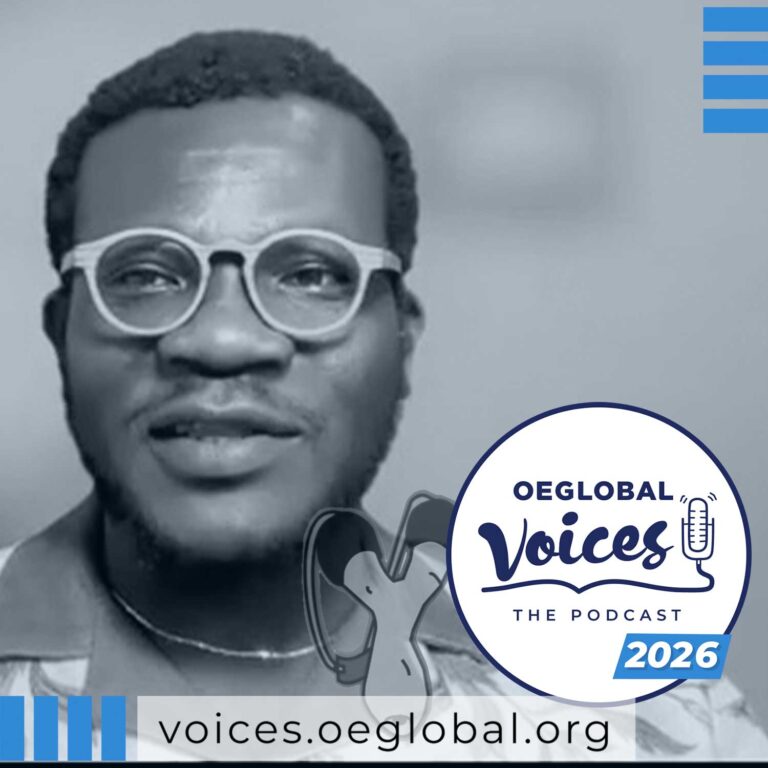
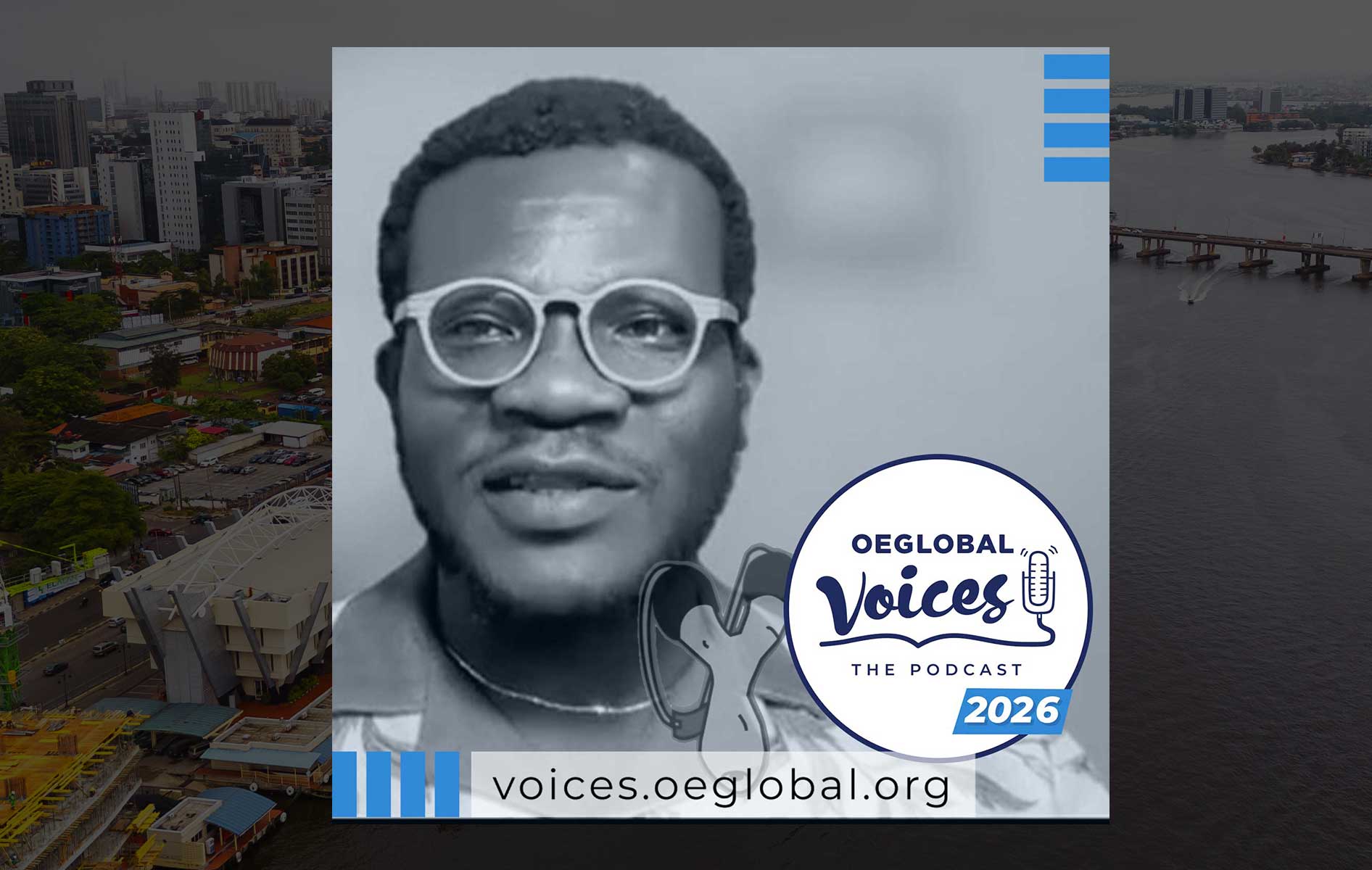
Our podcast has been quiet for a while but we are excited to turn the sounds back on with a trip to Lagos, Nigeria for conversation with linguist, folklorist, artist, and storyteller Adéṣínà Ayẹni.
Recognized in 2025 with an Open Education Award for Excellence as a Leader, Adéṣínà shares an insightful perspective into the richness and complexity of language in a country that counts more than 500 of them spoken, the cultural importance of localization to ones such as Yoruba. Enjoy our conversation that ranges from the language we think in to learning via music and puppets to the limits of Artificial Intelligence for translation of languages the large corporations are not including in models to the role of mentorship.
Our recording on June 15 was intended to highlight Adéṣínà’s achievements recognized by the OEAwards as nominations were still open at the time. And in the time since, as a previous awardee, Adéṣínà’ was generous to serve as a member of the review committee for the 2026 Awards.
Also listen closely to this episode’s musical intro track.

at Descript.com
In This Episode
FYI: For the sake of experimentation and the spirit of transparency, this set of show notes alone was generated by the AI “Underlord” in the Descript editor we use to produce OEGlobal Voices.
Preserving Nigeria’s Languages and Oral Traditions Through Open Education: A Conversation with Adésinà Ayeni
Host Alan Levine previews an OEGlobal Voices conversation with Adésinà Ayeni (Omo Yoruba), a Lagos-based creator and 2025 Open Education Award for Excellence winner, recorded June 15. Ayeni discusses Nigeria’s linguistic diversity (over 500 languages), the roles of Yoruba, Hausa, Igbo, English, and Nigerian Pidgin, and concerns about minority language decline amid urbanization and education policy favoring English. He argues people think first in their mother tongue, citing a Yoruba-vs-English teaching study, and emphasizes translation/localization as essential for inclusive education and Open Education. Ayeni describes projects translating stories, children’s oral literature using puppetry and music, and archiving Yoruba folklore as elders and oral “libraries” pass away. He critiques AI translation for lacking African-language data and promotes creating indigenous-language datasets and mentoring advocates via conferences and large WhatsApp groups.
- 00:00 Intro Music and Highlight Quote
- 00:59 Podcast Welcome
- 02:00 Meet Adesina Ayeni
- 03:24 Growing Up Lagos
- 05:42 Culture Sparks Linguist
- 08:08 Nigeria Language Landscape
- 11:25 Pidgin English Examples
- 14:07 Mother Tongue Thinking
- 16:12 Translation for Education
- 20:06 Stories Music Puppetry
- 23:11 Oral Tradition Folklore
- 27:39 AI Translation Limits
- 36:08 What Open Education Means
- 38:45 Mentoring Language Advocates
- 40:35 Closing Credits Music
(end of AI generated show notes)
Additional Links and Quotes for Episode 99
- Adésinà Ayeni (web site)
- Kultur River (Keeping African Heritage Alive)
- TermLog (Nigerian term database)
- Nigerian Pidgen English (Wikipedia)
- Nigerian English (Oxford English Dictionary)
- Nigeria scraps mother tongue education policy (Global Voices)
- History of The Six-Year Primary Project in the Use of Yoruba as the Medium of Primary Education (Yoruba Studies Review)
- StoryWeaver (Childrens Story in their Mother Tongue
- African Storybook
- Nigerian Institute of Translators and Interpreters
- ÌMỌ̀Ọ́ D’ÒYE: A Literacy Resource On Climate Change for Non-English Speakers Of Yorùbá Origin (project completed for Open Education for a Better World,OE4BW)
- National Open Education University of Nigeria
- Nigeria Open Education (OER World Map)
- Nigerian Languages Data & Sci-Tech Conference
- Firebird Research
- Nsibidi (Wikipedia)
And I have two WhatsApp groups, where I have over eight hundred linguists where I mentor them, on how to be language advocates, how to be cultural heritage promoters, so as to ensure that what I started, continues. Even when I’m no more, there are still people handing on the baton, like that. So yes, it continues. Just like I was talking about, cultural heritage and folklore. I’m a folklorist and almost everything I do is about folklore, because you get the folktale from someone, then you pass it on.
So they too become folklorists in the long run.
Adésinà Ayeni
Join us September 2 for the revealing of the winners of the 2026 Open Education Awards for Excellence, who are likely to be future guests on the podcast.
The open licensed music for this episode is a track called Conga Adeprocreated and shared by our guest Adésinà Ayeni that he has shared under a Creative Commons Attribution License.
A photo of the Adésinà‘s location in Lagos, Nigeria included as background in the featured image for this episode is Wikimedia Commons image Aerial view of Victoria island in Lagos, Nigeria by Ayorinde Ogundele shared under a Creative CommonsAttribution-Share Alike 4.0 International license.